
Accurate Carburetor CFM Calculator | Find the Right Carb Size (350–500 CFM)
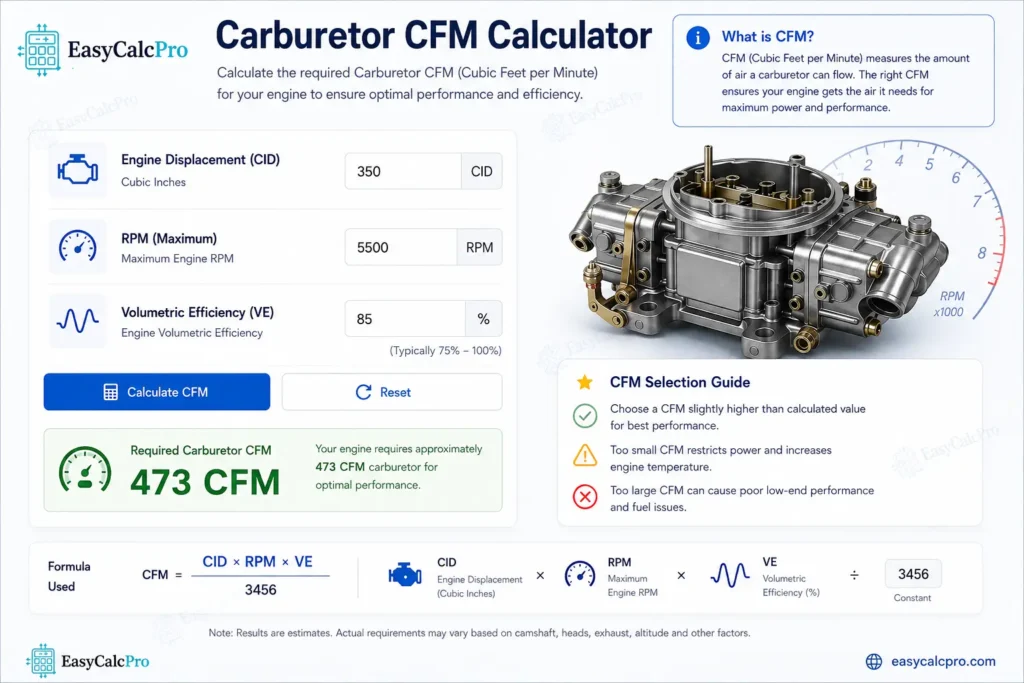
Choosing the correct carburetor size is one of the most important steps in building or upgrading an engine. A carburetor that is too small can limit airflow and reduce performance, while one that is too large may affect throttle response and drivability. Our Carburetor CFM Calculator helps you estimate the recommended carburetor airflow based on your engine's displacement, maximum RPM, and volumetric efficiency.
Whether you're installing a carburetor on a street vehicle, muscle car, classic truck, or racing engine, this calculator provides a quick estimate using a widely accepted formula. It also serves as a useful reference if you're comparing options from manufacturers such as Holley or Edelbrock before making a purchase.
What Is a Carburetor CFM Calculator?
A Carburetor CFM Calculator estimates how much air your engine requires at full power. The result is expressed in CFM (Cubic Feet per Minute), which measures the volume of air flowing through the carburetor.
Knowing the proper CFM rating helps you select a carburetor that matches your engine's airflow requirements without restricting performance or sacrificing fuel efficiency.
Instead of relying on guesswork, this calculator provides a practical estimate based on engine specifications.
How Does the Carburetor CFM Calculator Work?
The calculator uses three primary values:
- Engine Displacement (CID)
- Maximum Engine RPM
- Volumetric Efficiency (VE)
After entering these values, the calculator applies the standard airflow equation to estimate the required carburetor size.
This calculation is suitable for:
- Street engines
- Performance builds
- Muscle cars
- Classic vehicles
- Hot rods
- Mild racing applications
Carb CFM Formula
The standard formula is:
CFM = (CID × RPM × VE) ÷ 3456Where:
CID
Engine displacement in cubic inches.
RPM
Maximum engine speed.
VE
Volumetric Efficiency expressed as a decimal.
Typical VE values include:
- Stock engines: 75–80%
- Mild performance engines: 80–90%
- High-performance naturally aspirated engines: 90–100%
- Professional racing engines: Over 100% in some cases
Example Calculation
Suppose your engine has:
- 350 CID
- 6,000 RPM
- 85% VE
The calculation becomes:
(350 × 6000 × 0.85) ÷ 3456
≈ 516 CFM
In this example, a carburetor around 500–550 CFM would generally be an appropriate starting point.
Why Choosing the Correct Carburetor Size Matters
Selecting the proper carburetor affects much more than peak horsepower.
Benefits include:
- Improved throttle response
- Better fuel economy
- Increased engine efficiency
- Smoother acceleration
- Easier engine tuning
- Reduced hesitation during acceleration
- Better overall drivability
Oversized carburetors often reduce air velocity, while undersized carburetors may restrict airflow at higher RPM.
Holley Carb Size Calculator
Many enthusiasts use this calculation before selecting a Holley carburetor. While Holley offers several carburetor sizes, the ideal choice depends on your engine's airflow requirements rather than simply choosing the largest model available.
This calculator provides a reliable starting point before comparing available Holley carburetor models.
Edelbrock Carburetor Sizing
Edelbrock carburetors are another popular option for street and performance engines. The recommended CFM depends on the same engine specifications used in this calculator.
Once you know your calculated airflow requirement, selecting the closest available Edelbrock carburetor becomes much easier.
Carburetor CFM Recommendations
Although every engine is different, these general guidelines can help.
| Engine Type | Typical CFM |
|---|---|
| Small 4-cylinder | 250–350 CFM |
| Small V6 | 350–500 CFM |
| Stock Small Block V8 | 500–650 CFM |
| Performance Small Block | 650–750 CFM |
| Big Block Street Engine | 750–850 CFM |
| Racing Engine | 850+ CFM |
These ranges are approximate. Actual requirements depend on engine modifications, RPM range, and volumetric efficiency.
Tips for More Accurate Results
For the most reliable estimate:
- Use the engine's actual displacement.
- Enter the maximum operating RPM rather than the redline if they differ.
- Choose a realistic volumetric efficiency.
- Consider future engine upgrades.
- Remember that forced induction engines may require different calculations.
Frequently Asked Questions
Is this carb cfm calculator accurate?
Yes. It uses the standard industry formula widely accepted by engine builders and automotive enthusiasts. The result provides an excellent starting point when selecting a carburetor.
What does CFM mean?
CFM stands for Cubic Feet per Minute, which measures the amount of air flowing through the carburetor.
Can I use this calculator for Holley carburetors?
Yes. The calculated airflow can help you select an appropriately sized Holley carburetor.
Does this calculator work for Edelbrock carburetors?
Yes. The airflow calculation is independent of brand and can be used when selecting Edelbrock carburetors as well.
What is Volumetric Efficiency?
Volumetric Efficiency (VE) measures how effectively an engine fills its cylinders with air during each intake cycle. Higher VE generally indicates better engine breathing and increased performance.
Can a carburetor be too large?
Yes. An oversized carburetor can reduce air velocity, making the engine less responsive at lower speeds and potentially affecting fuel economy.
Can a carburetor be too small?
Yes. A carburetor that cannot supply enough airflow may restrict engine performance, especially at higher RPM.
Conclusion
Selecting the right carburetor is essential for achieving balanced engine performance, fuel efficiency, and reliable drivability. Instead of estimating or relying solely on manufacturer recommendations, use this Carburetor CFM Calculator to determine the airflow your engine requires based on its specifications.
Whether you're restoring a classic car, upgrading a muscle car, or building a custom performance engine, calculating the correct CFM gives you a solid foundation for choosing a carburetor that matches your setup. Use the results as a guide, compare available carburetor sizes, and fine-tune your selection according to your engine's intended use.